



Blog
How to Know If Your Root Chakra Is Blocked: 8 Signs to Watch For

How to Know If Your Root Chakra Is Blocked: 8 Signs to Watch For
When someone comes to us with a root chakra issue, most of them don't even use that term — they usually say something like "I feel ungrounded" or "like the floor's been pulled out from under me." This is one of the most misunderstood chakras, because its symptoms rarely look spiritual at first glance — they usually just look like "a bad stretch," fatigue, or general anxiety.
This isn't a crystal list — you can find those in a dozen other places. Instead, we're looking at how you actually know your root chakra is out of balance, and what that means in practice, before you reach for any crystal or treatment.
What Is the Root Chakra, and Why Is It the Foundation?
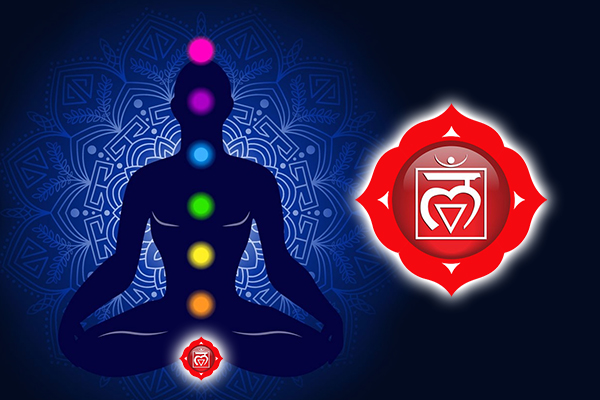
The root chakra (Muladhara in Sanskrit) sits at the base of the spine, around the lower pelvic area — it's the first and most foundational point in the seven-chakra system. While the upper chakras (like the crown chakra) relate to the mind and clarity, the root chakra is far more grounded: it's about your sense of safety, stability, and how "at home" you feel in your own body and your own life.
If this chakra is blocked, the work of every chakra above it ends up built on an unstable foundation — which is why it's often said that root chakra balance is where you should start before looking at anything else.
8 Signs Your Root Chakra Might Be Blocked
A blocked root chakra rarely shows up as a single symptom — it's more of a pattern that becomes clear once you look at it as a whole.
1. Chronic uneasiness, with no specific cause This isn't jealousy or a specific problem — it's a baseline restlessness, as if the ground could shift under you at any moment, even when nothing about your circumstances objectively justifies it.
2. Financial or existential anxiety that's out of proportion The root chakra is closely tied to material security. If you notice your anxiety about money is far bigger than your actual circumstances would warrant, that's a common sign.
3. Physical symptoms in the lower body Lower back pain, hip or leg tension, digestive issues — these are all physical signs traditionally linked to the root chakra, since this chakra is also physically tied to that area of the body.
4. Struggling to handle change Moving, changing jobs, relationship uncertainty — if these hit you disproportionately hard, and it takes a long time to feel "grounded" again afterward, that can point to a shakier sense of stability to begin with.
5. Dissociation or feeling "checked out" of your body This is one of the most common things clients describe — feeling like they're "not fully present" in their own body. This is different from the "mental fog" of a crown chakra imbalance — here it's more about not feeling settled in your body.
6. Chronic fatigue or low physical energy This isn't about lack of sleep — it's a deeper, ongoing exhaustion that doesn't go away with rest, often linked to the root chakra not being sufficiently "charged."
7. Difficulty trusting others or your own decisions Trust — both in others and in yourself — is one of the core areas the root chakra governs. If you notice you constantly second-guess your decisions, or find it hard to let people get close, this can be part of it too.
8. Excessive need for control, or the opposite: total loss of control A blocked root chakra can go one of two ways: either you grip tightly onto control (because deep down the situation doesn't feel safe), or you feel completely powerless instead.
Important: These Are Not Diagnoses
These signs are linked to the root chakra by traditional chakra teaching, but it's worth being clear: they don't replace a medical or psychological evaluation. If several of the above symptoms show up persistently and intensely — especially anxiety, dissociation, or chronic fatigue — it's worth discussing this with a professional (a doctor or therapist) alongside your spiritual practice, not instead of it.
What You Can Do If You Recognise This in Yourself
If you recognised several of these in yourself, there are a few simple steps you can try right away:
Physical grounding: walking barefoot on grass, gardening, or simply consciously feeling the ground under your feet.
Breathwork: slow, deep belly breathing, consciously focused on the lower part of the body. Root chakra crystals, such as Red Jasper, Black Tourmaline, or Hematite.
Routine and repetition: the root chakra actually benefits the most from a repetitive, predictable daily routine — this is the one chakra where monotony genuinely helps rather than hurts.
When a Crystal Alone Isn't Enough
A handheld crystal is a good starting point, but a root chakra blockage often sits deeper than what a few minutes of home practice can shift. During a Crystal Bed treatment, the practitioner can hold energetic focus specifically on the root chakra for a longer, uninterrupted stretch of time — a kind of "accelerated" version of what you'd otherwise build up slowly over weeks at home.
Frequently Asked Questions
How long does it take for a root chakra block to resolve? This varies a lot, and depends on how long it took to build up. With consistent, daily practice (breathwork, grounding, crystal use), many people notice a change within weeks, but it's not a one-time, instant process.
Can a root chakra block cause anxiety? According to traditional chakra teaching, yes, since this chakra is directly tied to your sense of safety. That said, persistent or severe anxiety is worth discussing with a professional as well.
Important!
A blocked root chakra is rarely a dramatic event — it's more of a slow drift that's easy to overlook, because its symptoms feel "ordinary." But once you recognise the pattern, the first step is simple: start with your body, your breath, and a crystal or two — from there, you'll be able to tell whether you need deeper, guided work as well.